CHOOSE YOUR CRAFT
Cooking or baking?
Find your direction.
If you enjoy both cooking and baking, choosing a course can feel harder than choosing a dish. Compare the work you want to practise, the way you like to learn and the current syllabus—not just the course name.
Cook & Bake Academy · Culinary Journal

Start with the work you want to do
Think about the activities you would like to repeat often, not only the food you enjoy eating. In a cooking project, you may be organising several components, tasting during preparation and coordinating the finish of a meal. In a baking project, you may be measuring a formula, observing dough or batter, managing resting stages and finishing products consistently. Both require organisation, attention and practice; neither is simply the easier option.
Write down three projects you genuinely want to learn. Be specific: preparing a balanced plated meal, developing a reliable bread, or decorating a cake gives you more to discuss than “I like food.” Then identify the techniques behind each project. That list becomes a practical starting point for a conversation with admissions.
Do not make the decision from a dramatic kitchen video alone. Ask what a normal learning session involves, how much work you will do yourself and how feedback is given. The best fit is the programme whose current teaching matches your purpose and circumstances.
Compare syllabuses, not just course labels
Culinary arts, bakery and patisserie programmes can overlap. A cooking programme may include bakery topics, while a baking course may develop production planning and presentation skills. The title alone does not tell you how much emphasis each subject receives.
At Cook & Bake Academy, the current practical syllabus for the Diploma in Culinary Arts & Cookery includes dedicated bakery and dessert training. Indian Cuisine is not included in that diploma. Learners interested in that subject should examine the relevant Indian Cuisine certificate or hobby programme separately.
For each course you are considering, request the current topic list and distinguish practical preparation from demonstrations and theory. Ask how projects progress, which techniques are compulsory and whether any optional subjects involve additional arrangements. Avoid treating a photograph of a dish as proof that the dish is included in the syllabus.
Keep qualification details separate from the topic comparison. Ask for the exact award title, awarding organisation, registration requirements and assessment arrangements for the specific course. Do not assume every culinary or baking programme carries the same qualification.
Try a small comparison before committing
Choose one familiar cooking recipe and one tested baking recipe appropriate to your experience. These are learning exercises, not admissions tests. Follow each method carefully and record the same four observations: how much preparation you needed, which stages you enjoyed, where you needed help and whether you wanted to repeat the project.
- Preparation: Did you enjoy arranging ingredients and equipment before starting?
- Observation: Were you interested in how texture, consistency or appearance changed?
- Repetition: Would you willingly make the same item again to improve it?
- Feedback: Can you name one thing you would change next time?
A disappointing first bake does not mean baking is wrong for you, and an attractive first plate does not establish professional readiness. Look at your interest in the process and your willingness to practise. Use a cooking notebook to record what actually happened rather than judging yourself from one result.
Choose a realistic learning route
Professional training and hobby learning serve different purposes. If you are exploring food for personal enjoyment, compare focused hobby cooking and hobby baking options. If you want a broader professional pathway, review the diploma programmes and certificate programmes with the academy.
Before enrolling, confirm the timetable, total duration, eligibility, fees and included materials for your chosen programme. Consider the journey to Paschim Vihar, New Delhi and the time available for practice. For any industrial-training component, clarify what is required and how it is arranged. Do not infer those details from another course’s page.
Training can develop skills, but a course title alone does not guarantee a job, business result or overseas opportunity. Ask how the programme supports your next step and evaluate any specific claim against current written information.
Your next step: take your three learning goals and syllabus questions to the academy. Arrange an admissions conversation or academy visit, then choose the course whose actual content fits the work you want to learn.
Bring your questions.
Explore the craft.
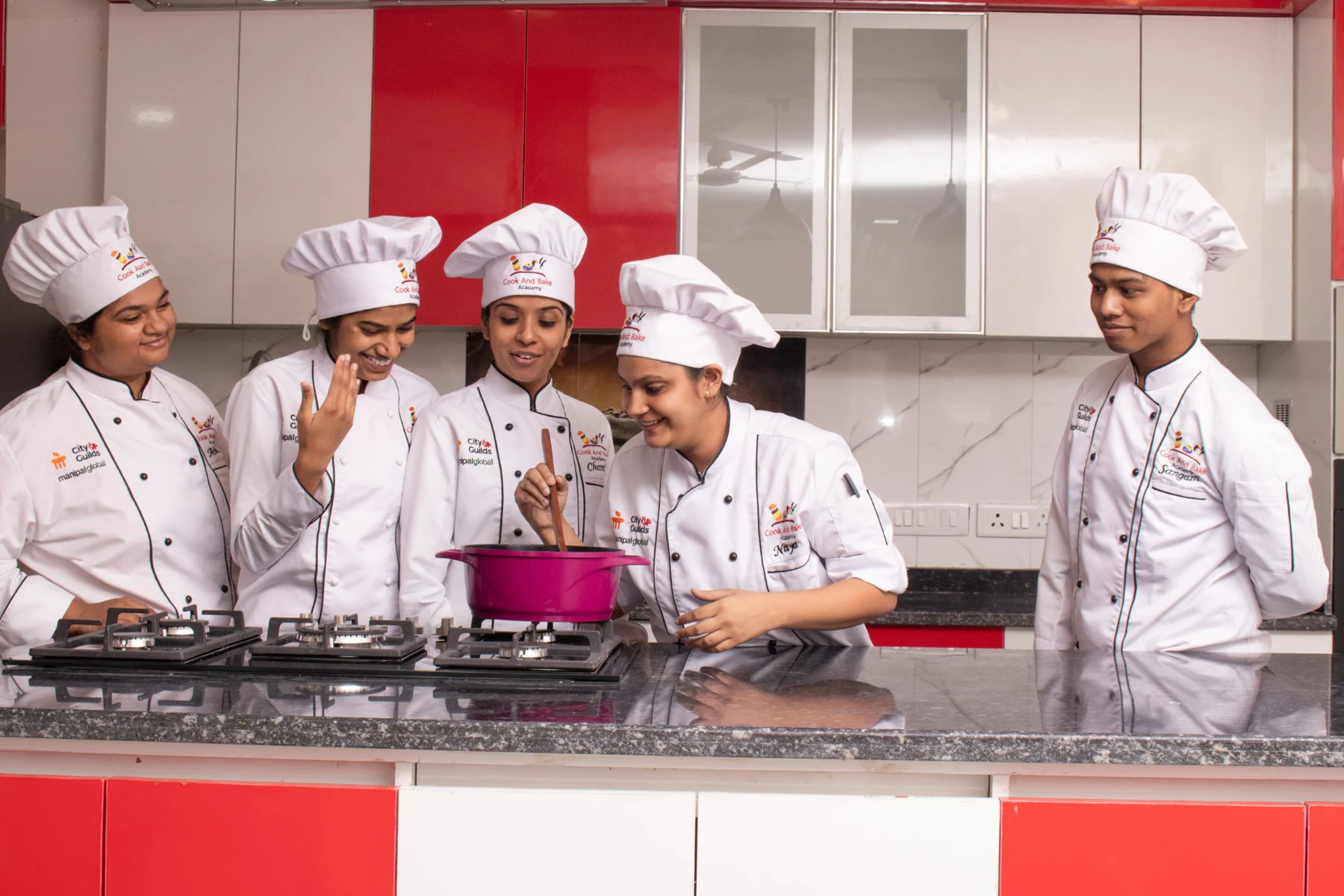
Curious about learning in a real academy kitchen? Speak with admissions about your interests, current programmes and arranging a visit to Paschim Vihar, New Delhi.
Cook & Bake Academy · Paschim Vihar, New Delhi