CULINARY JOURNAL
Choosing Flour for Bread and Cake: Read Beyond the Name
Learn how flour choice affects bread and cake structure. Read protein information, avoid automatic substitutions and record a useful flour comparison.
Cook & Bake Academy
Flour is part of the structure
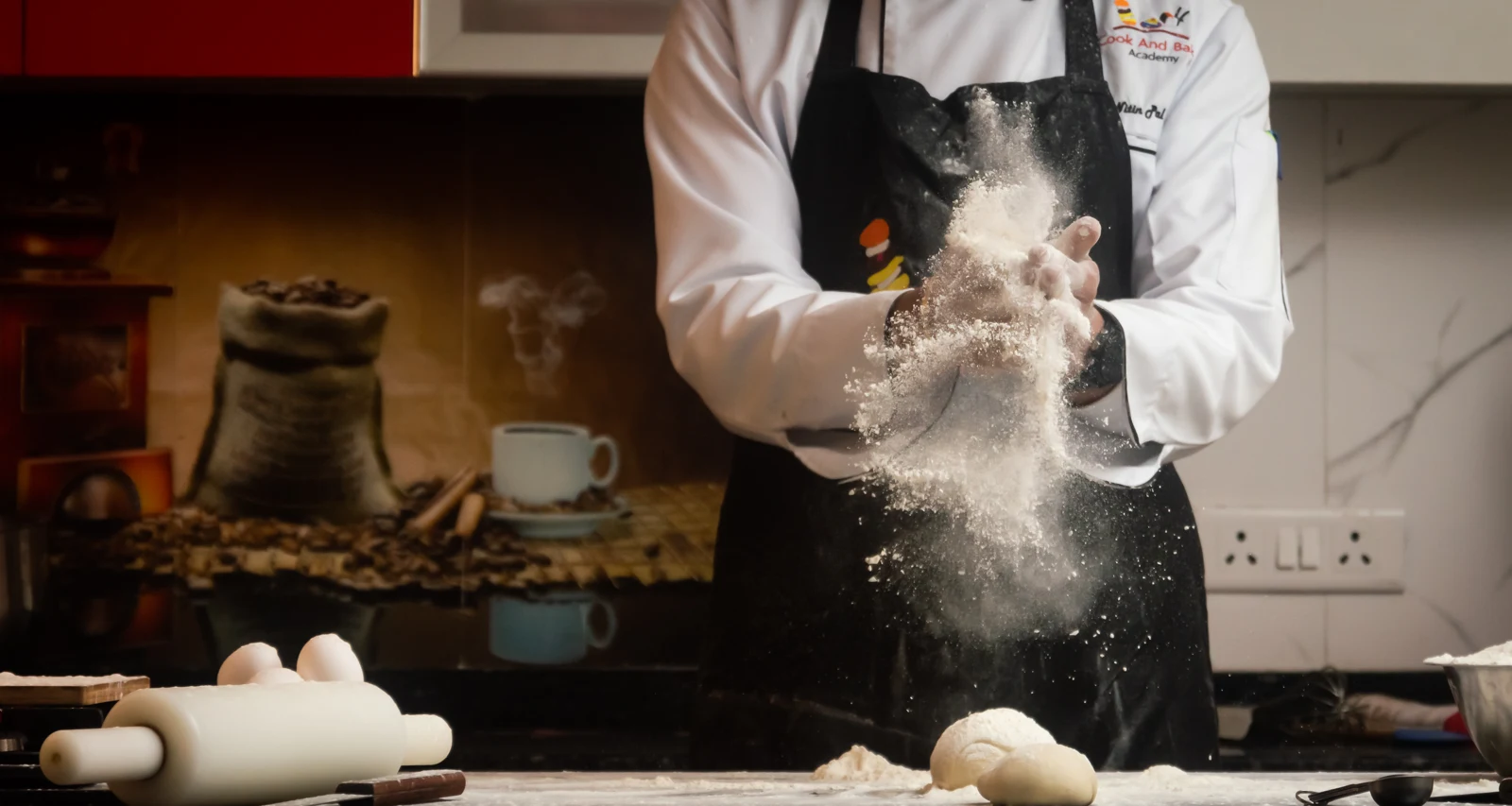
Bread and cake ask different things of flour. A bread dough often needs a network that can stretch and hold gas. A tender cake usually calls for a gentler structure. That is why two white wheat flours can behave differently even when they look similar in the bowl.
Protein content is one useful clue to gluten-forming potential. It is not the only property that matters, and a flour’s name does not give the same specification in every country. Read the package and the recipe together rather than assuming that every product labelled plain flour, maida or all-purpose flour is identical.
King Arthur Baking explains the relationship between protein and structure. Its published percentages describe its own products; do not transfer those numbers automatically to a different brand.
Keep the first bake close to the recipe
Use the flour type requested for your baseline batch. Measure by the recipe’s stated weight when available, and note the brand. If a specialised flour is unavailable, choose a recipe developed for the flour you have rather than making several substitutions at once.
Self-raising flour contains added ingredients and should not be treated as plain flour without adjusting a suitable recipe. Wholemeal flour also changes more than colour. Particle size, bran and absorption can affect the dough or batter.
Avoid trying to correct every difference by adding extra flour during mixing. That may make handling easier while changing the intended balance.
Run a controlled comparison
Once you have a successful baseline, make a small second batch with one deliberate flour change in a recipe where comparison is appropriate. Keep the pan, batch size, mixing method and oven setting consistent.
Record handling observations before baking: sticky, extensible, stiff or easy to spread. After the product has cooled as directed, compare crumb, tenderness, chew and shape. A photograph of the cut surface is useful, but it cannot tell you how the bake feels to eat.
Write the exact change beside the result. “Different flour” is less useful than the product name and the quantity used.
Choose for the product you want
The best result is not always the tallest loaf or the softest cake. Compare the finished bake with its intended style. A chewy bread and a delicate sponge have different standards.
Build a small flour record instead of relying on memory. Include the packet information, recipe, date and one observation worth testing again. Our measurement guide and dough observation guide support this approach.
Explore Bakery & Patisserie study for the academy’s programme information. In home practice, learning one flour thoroughly is often more useful than buying several unfamiliar types and changing them all at once.
Bring your questions.
Explore the craft.
Curious about learning in a real academy kitchen? Speak with admissions about your interests, current programmes and arranging a visit to Paschim Vihar, New Delhi.
Cook & Bake Academy · Paschim Vihar, New Delhi