CULINARY JOURNAL
Balancing Textures in a Dish Without Adding Clutter
Build contrast between crisp, soft, smooth and chewy elements. Use a simple eating test to decide whether a garnish improves the dish or adds clutter.
Cook & Bake Academy
Describe the main eating experience
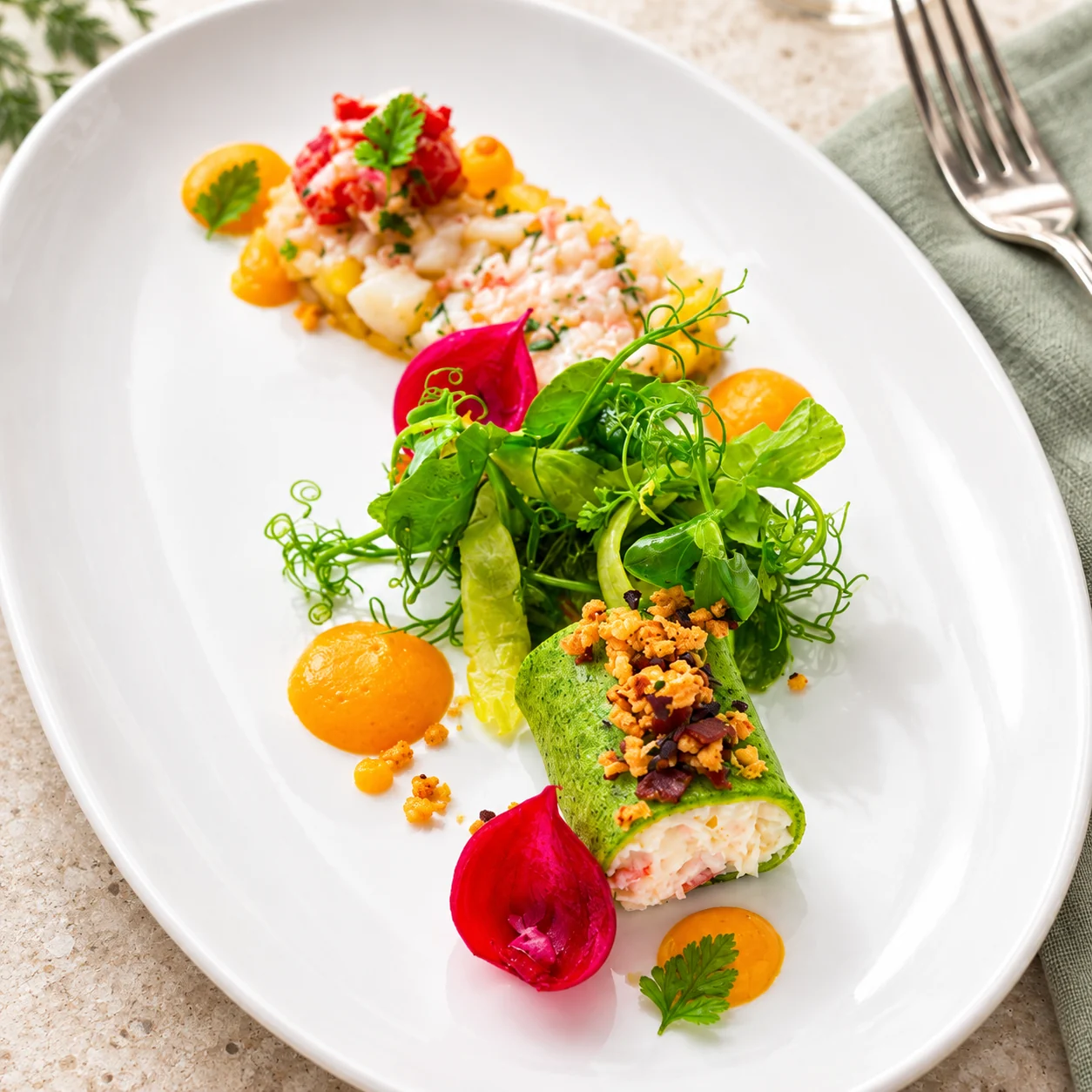
Texture is how food feels as you eat it: crisp, tender, smooth, chewy, crumbly or creamy. A dish can look colourful and still feel repetitive if every component has the same soft texture.
Start with the main ingredient. Describe its intended texture and then decide whether a contrast would improve the meal. Contrast is an option, not a requirement to add five more components. A delicate preparation may work best with restraint.
This article offers an original planning exercise. It is not a fixed formula for restaurant plating, and it does not require specialist equipment.
Choose one useful contrast
For a smooth vegetable soup, you might test a small amount of an appropriate crisp accompaniment. For a crunchy salad, a softer element may make the eating experience more varied. Choose additions that also make sense in flavour, portion and dietary context.
Prepare the components using established recipes. Do not add uncooked ingredients simply to create crunch if they require cooking or other preparation. Check the suitability of nuts, seeds and other additions for the people eating the dish.
Write down what the addition is supposed to do. “Adds a crisp bite” is a testable purpose. “Makes it premium” does not help you judge the result.
Test a forkful, not only a photograph
Make a small plate with the main component alone and another with your proposed contrast. Taste both. Ask whether the addition is easy to combine in one bite, whether it overwhelms the main ingredient and whether the portion feels balanced.
Then wait for the normal serving interval and reassess. A crisp element touching a wet sauce may soften. The result immediately after plating is not always the result a guest receives.
Photograph the arrangement if helpful, but keep the eating notes beside it. A garnish that is difficult to cut or falls off the plate has a practical cost even when it looks attractive.
Simplify before adding another element
If the contrast does not work, first try changing the amount, size or placement. Do not immediately add a second garnish to compensate for the first. Removing an unnecessary component can make the dish clearer.
Use a short checklist: does it contribute flavour, texture or a necessary accompaniment; can it be eaten comfortably; does it remain suitable during serving; and can you reproduce the portion?
Continue with our food plating guide and tasting vocabulary. The cooking-method comparison can help you create contrast through technique rather than extra ingredients. For structured learning options, browse the academy’s courses. The most useful texture decision is one that improves the whole dish.
Bring your questions.
Explore the craft.
Curious about learning in a real academy kitchen? Speak with admissions about your interests, current programmes and arranging a visit to Paschim Vihar, New Delhi.
Cook & Bake Academy · Paschim Vihar, New Delhi