
CULINARY JOURNAL
Blanching Vegetables: Control Colour and Texture
Learn what blanching does, why an ice bath matters in many methods, and how draining and the next cooking stage affect the finished vegetables.
Cook & Bake Academy
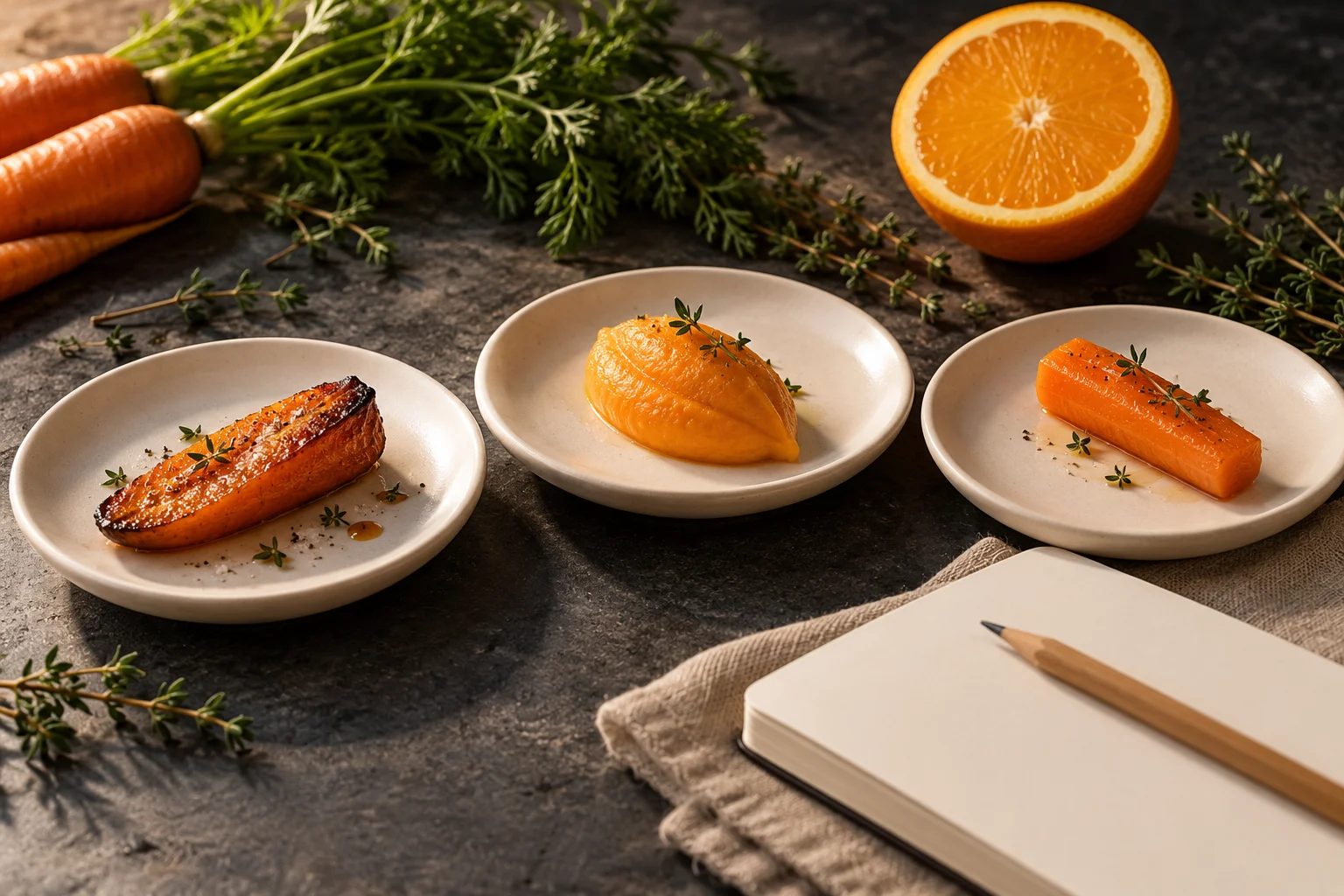
Understand the purpose of the first cook
Blanching is a brief cooking stage, often in boiling water, followed by rapid cooling when the food will be cooked or used later. It can be part of preparing vegetables for a finished dish. The aim is controlled partial cooking, not simply making vegetables hot.
The Canadian food guide’s blanching instructions describe the boiling-water and ice-bath sequence. Exact timing depends on the vegetable, cut and intended use. Do not apply one timing to every ingredient.
Blanching for immediate culinary use and blanching for preservation have different requirements. Use a tested preservation procedure if freezing or preserving is your purpose.
Prepare the cooling stage first
Have the equipment ready before the vegetables enter the water: a suitable pot, a safe lifting or draining method, and the cooling bath required by the recipe. Cutting vegetables consistently helps avoid a batch containing both raw centres and over-soft pieces.
Work in a quantity that suits the pot. A very large addition changes the water temperature and makes the process less predictable. Keep your attention on the recipe’s texture cues as well as its timing.
Handle boiling water carefully and keep the route to the sink or cooling bowl clear. The practical organisation described in our mise en place guide is particularly useful when a cooking stage is short.
Check texture, then drain properly
Colour is helpful, but it is not the only assessment. A brightly coloured piece can still be too firm for its intended use. Test a representative piece according to the recipe, allowing it to cool enough to handle safely.
After cooling, drain thoroughly. Water left on the surface can dilute a dressing or interfere with a later sauté. Use the next recipe stage as your guide: a vegetable destined for a warm finishing step may need a different endpoint from one going straight into a salad.
Record the cut size, batch quantity, cooking time and texture. Avoid copying a successful time into your notebook without the details that made it work.
Practise with one vegetable and one destination
Choose a tested dish that uses blanched vegetables. Make it twice, keeping the cut and batch size consistent. On the second attempt, focus on improving the draining or organisation rather than changing the entire method.
Write a brief assessment of the final dish: tender enough, still too firm, water collecting on the plate, or evenly finished. Those observations point to a useful next adjustment.
Read the cooking-method comparison to understand how blanching relates to steaming and roasting. Explore Culinary Arts & Cookery for the academy’s professional course information. The skill is controlling the handover between the first cook, cooling and the final dish.
Bring your questions.
Explore the craft.
Curious about learning in a real academy kitchen? Speak with admissions about your interests, current programmes and arranging a visit to Paschim Vihar, New Delhi.
Cook & Bake Academy · Paschim Vihar, New Delhi