CAREER PREPARATION
Create an honest culinary portfolio from your own practice
A beginner’s culinary portfolio should make your learning visible. Clear photographs, accurate labels and thoughtful notes are more credible than borrowed images or exaggerated claims.
Cook & Bake Academy · Culinary Journal

Use work you can explain
Select dishes or baked products you actually prepared and have permission to share. Identify whether the work was individual or completed as part of a team. Do not present a demonstration dish as your own independent work. If a photograph includes other people, check permission before publishing it.
Label the context
For each item, include the product name, date or learning stage, your role and the technique you practised. Keep qualification and assessment claims separate unless you can substantiate them. A short note about what you changed after feedback often shows more learning than a string of impressive adjectives.
Keep the presentation simple
Use clear, consistent photographs and readable captions. Include a small selection with enough detail to discuss, rather than dozens of nearly identical images. Avoid editing that misrepresents the food. If you use a website, check it on a phone and make sure your contact details are current and appropriate to share publicly.
Prepare to discuss the process
Practise explaining the method, a difficulty you encountered and what you would improve next time. Tailor the selection to the opportunity without inventing experience. A portfolio can support a conversation about your work; it does not guarantee admission, employment or a visa. Ask the academy about the current career-support arrangements for your specific programme.
A portfolio entry template
- Dish and date: identify the work clearly.
- Context: home practice, academy exercise or another accurately described setting.
- Your role: what you personally prepared.
- Technique: the method you practised.
- Reflection: one challenge and one improvement.
Use your own photographs with permission for any identifiable people. Do not present generated culinary illustrations as dishes you made, or group work as entirely your own. A small set of well-explained examples is more useful than many images with no context.
Continue learning: Keep evidence of your learning process.
Bring your questions.
Explore the craft.
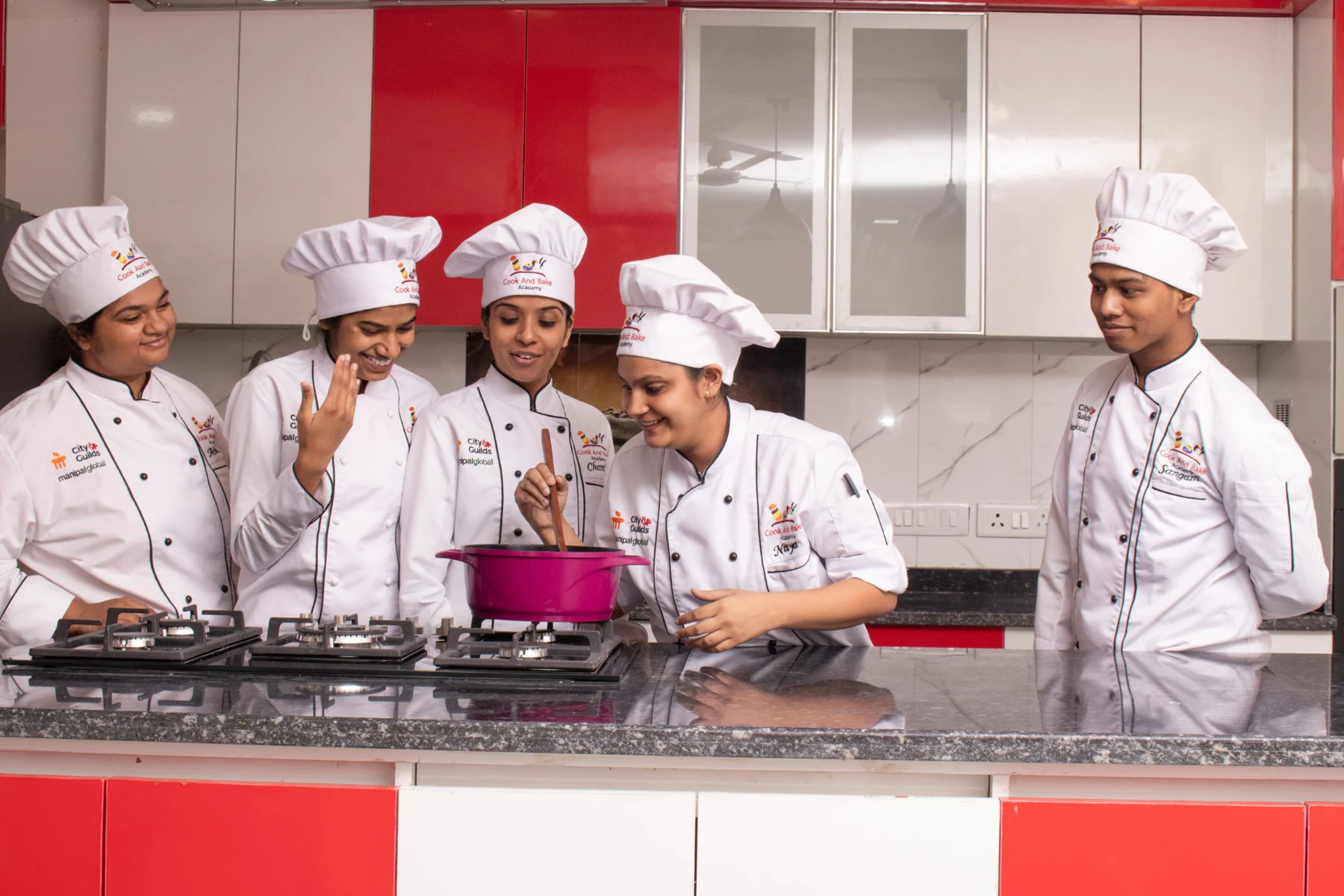
Curious about learning in a real academy kitchen? Speak with admissions about your interests, current programmes and arranging a visit to Paschim Vihar, New Delhi.
Cook & Bake Academy · Paschim Vihar, New Delhi