
THE BAKING NOTEBOOK
Measure with care.
Bake with understanding.
Baking combines a method with a balance of ingredients. Careful measurement will not solve every problem, but it gives you a clearer starting point when you want to understand why a bake worked—or did not.
Cook & Bake Academy · Culinary Journal
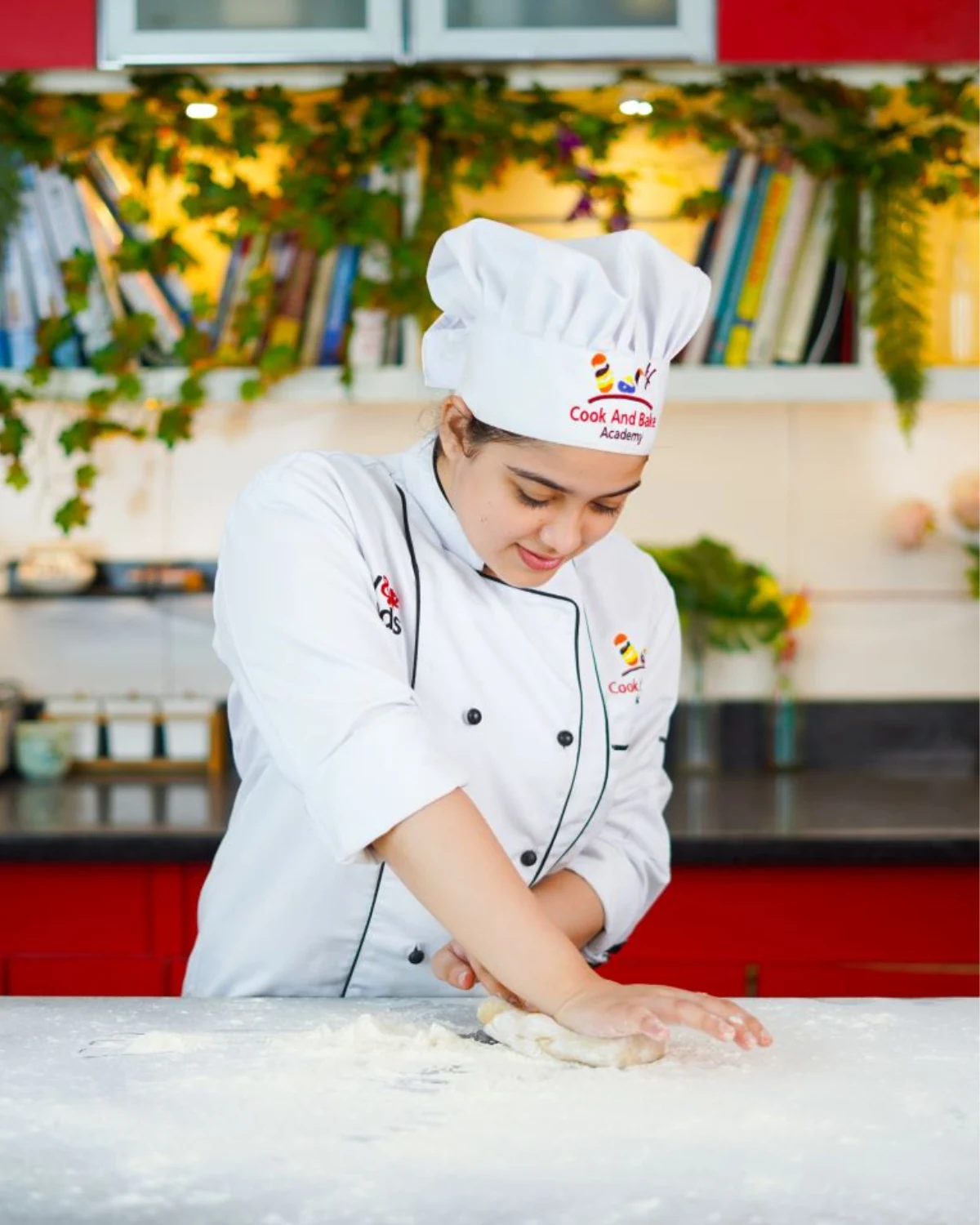
Follow one system of measurement
If your recipe gives weights, use a kitchen scale that can measure the amounts required. Put the bowl on the scale and zero it before adding the first ingredient. Zero it again when you add another ingredient to the same bowl.
Avoid mixing the weight instructions from one recipe with cup quantities from another. Different authors may use different cup sizes or measuring methods. A cup is a measure of volume, so one cup of flour does not weigh the same as one cup of sugar.
Pay attention to the small quantities
Salt, raising agents and flavourings may be used in amounts that are too small for some kitchen scales to measure reliably. Follow the recipe’s specified measuring method and use suitable measuring spoons where called for.
Check whether a spoonful is level or heaped. Keep the recipe’s units visible while you work, and avoid estimating an unfamiliar quantity by eye. Before mixing, check that you have not confused grams with millilitres or teaspoons with tablespoons.
Ingredient condition matters too
Measurements are only part of the method. Butter described as melted, softened or cold is being used in different conditions. Follow those instructions rather than treating the words as optional.
Read any guidance on egg size, flour type and ingredient substitutions. Changing an ingredient can change flavour, texture and how a mixture behaves. If you experiment, change one thing at a time so the result is easier to interpret.
Keep a small baking notebook
Record the recipe source, ingredient brands or types, any substitutions and the oven setting you used. Note the pan size and the signs you used to judge the bake, rather than relying on time alone.
After it has cooled as instructed, describe the texture and flavour. A short note such as “batter spread more than last time” is more useful than simply writing “failed”. These observations give you a specific question to investigate on the next attempt.
Use reliable recipes as your foundation. Keep the original method alongside your notes so you can distinguish what the recipe said from what you changed.
A simple measurement record
For each trial, record the recipe quantity, the quantity actually weighed and any ingredient substitution. Tare the scale with the empty bowl in place, then check that its units match the recipe. A quantity shown in grams should not be read as millilitres: ingredients do not all have the density of water.
When comparing two bakes, keep the pan, oven mode and recipe version the same. If you change several things together, you cannot tell whether the measurement correction helped. For very small quantities, use a suitable measuring tool rather than guessing beyond the scale’s precision.
Continue learning: Scale a baking recipe carefully.

Bring your questions.
Explore the craft.
Curious about learning in a real academy kitchen? Speak with admissions about your interests, current programmes and arranging a visit to Paschim Vihar, New Delhi.
Cook & Bake Academy · Paschim Vihar, New Delhi